What is Plaster Mold Casting?
Plaster mold casting is a precision metal forming process, also known as rubber plaster molding (RPM). It employs disposable plaster (gypsum) molds to manufacture intricate, high-precision, thin-walled non-ferrous castings including aluminum, copper and zinc alloys.
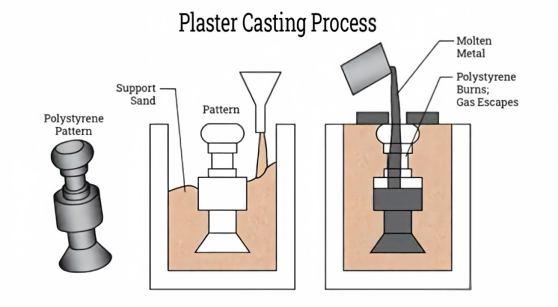
How Does Plaster Mold Casting Work
|
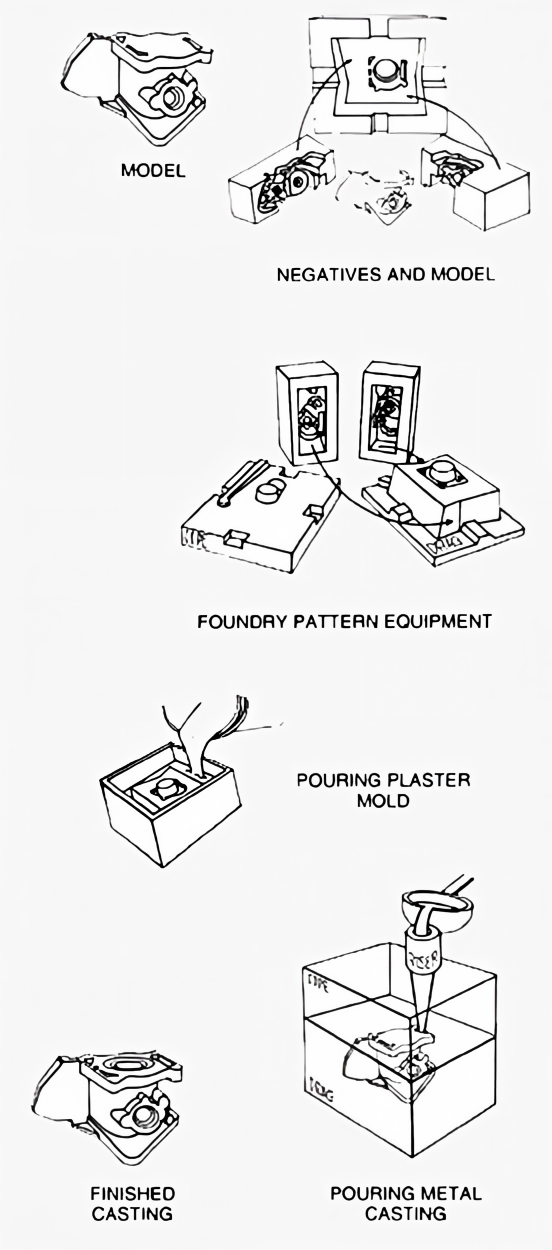
Step 1: Master Pattern Preparation A precision master pattern is created based on customer drawings or CAD data, using SLA 3D printing, CNC machining or manual crafting. The pattern is engineered with allowances for metal shrinkage, mold taper and machining stock as required. We can also reproduce or modify customer-provided models upon request. Step 2: Tooling & Pattern Fabrication Master negatives are produced from the original pattern, followed by core plugs, resin upper and lower mold patterns, and core boxes. Gating systems, runners and flasks are integrated according to product requirements. Multiple sets of production tooling can be duplicated from the master negative mold. Step 3: Plaster Mold Manufacturing Liquid plaster slurry is poured over the resin patterns and into core boxes. After solidification, the plaster molds and cores are demolded and thoroughly baked to eliminate internal moisture. Step 4: Metal Pouring & Demolding The molten metal is degassed and spectroscopically tested to verify chemical composition before pouring. Qualified molten alloy is poured into the assembled plaster mold. After cooling, plaster residue is removed via mechanical knockout and high-pressure water jet cleaning, followed by removal of gates and risers. Step 5: Inspection & Secondary Operations Raw castings are inspected and serialized. Additional treatments such as heat treatment, X-ray testing and penetrant inspection are performed per customer standards. After final inspection, parts proceed to CNC machining, surface finishing including chemical film and chromate conversion coating, assembly, or form-in-place gasketing. |
|
Core Features / Advantages
- Excellent replication ability with smooth mold cavity; surface roughness up to Ra 1.6 μm
- Cost-effective for prototyping and small-to-medium batch production (100–5000 pcs)
- Manufacturing large complex castings beyond the size limit of investment casting
- Low thermal conductivity of plaster enables long filling time, ideal for thin-wall parts
Application Scope
- Ideal for: precision castings with complex geometry, high accuracy and good surface finish.
- Alloys: aluminum, zinc, copper, gold, silver and other non‑ferrous metals.
- Wall thickness: 0.5‑1.5 mm.
- Max casting dimension: up to 2 m.
- Industries: aerospace, electronics for complex thin‑wall precision components.